LUMI Reviews: BFF: Die My Love and the Female Gothic
26 November 2025
LUMI Programmer Ellie Traynor considers the 'Female Gothic' in Die My Love at Belfast Film Festival.
In 1976, Ellen Moers coined the term ‘Female Gothic’ in her novel Literary Women.
Stating that the subgenre is ‘Easily defined: the work that women have done in the literary mode that, since the eighteenth century, we have called the Gothic.” Taking tropes from the gothic and focusing them on the horror of women’s lives: key amongst them being isolation and motherhood. Lynne Ramsey’s new psychological drama, Die My Love forces the audience to endure a brutally honest depiction of postpartum depression through the lens of the Female Gothic.
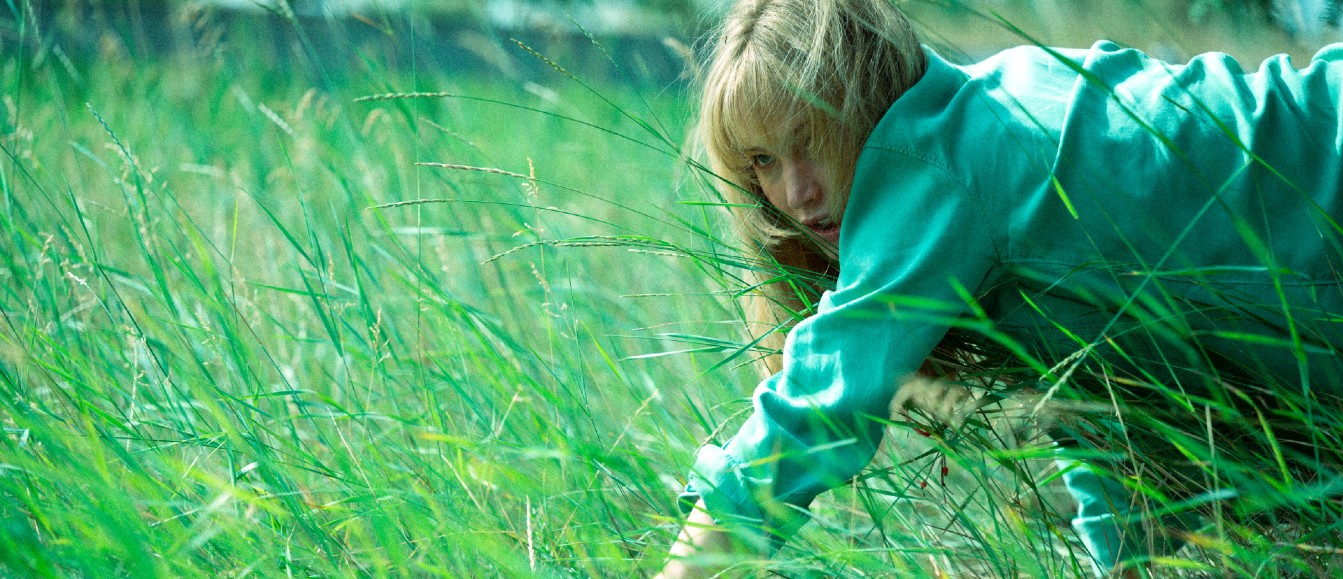
Based on Ariana Harwicz’s novel of the same name, the film focuses on Grace (played by Jennifer Lawrence) as she moves to an isolated farmhouse with her boyfriend, Jackson (played by Robert Pattinson). After the birth of her son, Grace’s postpartum depression manifests in increasingly wild and violent ways as she tries to come to terms with her new reality.
What initially drew me to connect this film to the tradition of the Female Gothic is the sense of isolation that permeates the setting. A haunted house, heavy woodland. All in the middle of nowhere. Rural Montana embodies the Gothic. Helmed by cinematographer and Armagh native, Seamus McGarvey, we are treated to so many haunting shots of open fields and sprawling dirt roads. If Grace leaves the house, it is on foot and usually with a stroller. She is completely isolated from any civilisation and this serves to only drive her further into despair.
It is mentioned throughout the film that Jackson’s Uncle died in their house. Suicide. A throw away reference in an already very turbulent plot. But the haunted house is one of the most popular tropes of the genre and while manifesting in a very unconventional way, is a haunted house nonetheless. This is not a ghost story, it’s not paranormal activity. But Grace’s fascination with this man’s suicide serves to bleed into her own ending. The domestic sphere, the source of so much horror in the Female Gothic, has already been polluted by death before the film begins. Dooming Grace to her fate.
Her only reprieve is the woods that surround her home. Really the only moments of peace that Grace is allowed during the film’s run time, soaked in the moonlight and barefoot in the dirt. This connection Grace has to the woodland culminates in the film’s tragic end, as Grace sets the forest on fire and walks naked into the flames. Speaking in an interview, Lawrence gives her own interpretation: “When I was filming the movie, I was pregnant, so I think I couldn’t see it any other way. I saw the fire as kind of like a rebirth and a cleanse … After I had my baby, I was like, she kills herself.”
Grace’s relationship to motherhood is in line with the classic depictions in the genre.
Motherhood and the Female Gothic work in tandem. This loss of self, the entrapment in the role of mother is at the crux of the horror. And in turn, the theme forces the audience to confront these oppressive gendered expectations forced on the women who find themselves in this role.
There is one line of dialogue that resonates with me above the rest. In the middle of an argument, Jackson begs Grace to calm down and think about the baby. She snaps back, “I am always thinking about the baby.” Her love for her son is all consuming yet so destructive to her personhood.
Grace grieves her old life while reckoning with a new one. One that bore her a son with a man that no longer loves her. One that leaves her caged in a house marred by death. It is no wonder why the film ends the way it does. Grace burning her manuscript and walking naked into the burning woods; returning to mother earth in all her blazing glory.
There is one scene that I cannot ignore in this review and it is the scene where Grace destroys the bathroom.Grace is very aware that Jackson is sleeping with other women, when he refuses to have sex with her in the car on the way home from the grocery store, Grace rampages through the house and locks herself in the bathroom. She destroys all around her.
Knocking everything off of counters, off the shelves. She starts carving her nails into the bathroom wall, peeling the wallpaper off with her bloodied fingers. All filmed in one painful and continuous shot. The film is already drawing comparisons to the Gothic short story The Yellow Wallpaper and it is not hard to see why.
In the role of Grace, we get a career best performance from Lawrence. In such a physically demanding role, Lawrence captures the wild and animalistic nature of a trapped woman. This feral horror that Ramsey puts under a microscope. It is raw, and it is uncomfortable and it is all too real.
As someone with an English degree, I enjoyed spotting the Gothic tropes incorporated into the film. As a young woman, the way that Lynne Ramsey intertwines these tropes with the horrors of motherhood made my stomach churn. As an artist, watching Grace deteriorate and be pulled away from the passion that makes her life worth living made Die My Love nothing short of a horror film.