LUMI Reviews: BFF: Saipan and the Performance of Masculinity Onscreen
01 December 2025
LUMI Programmer Ellie Traynor reviews gripping football drama Saipan at Belfast Film Festival.
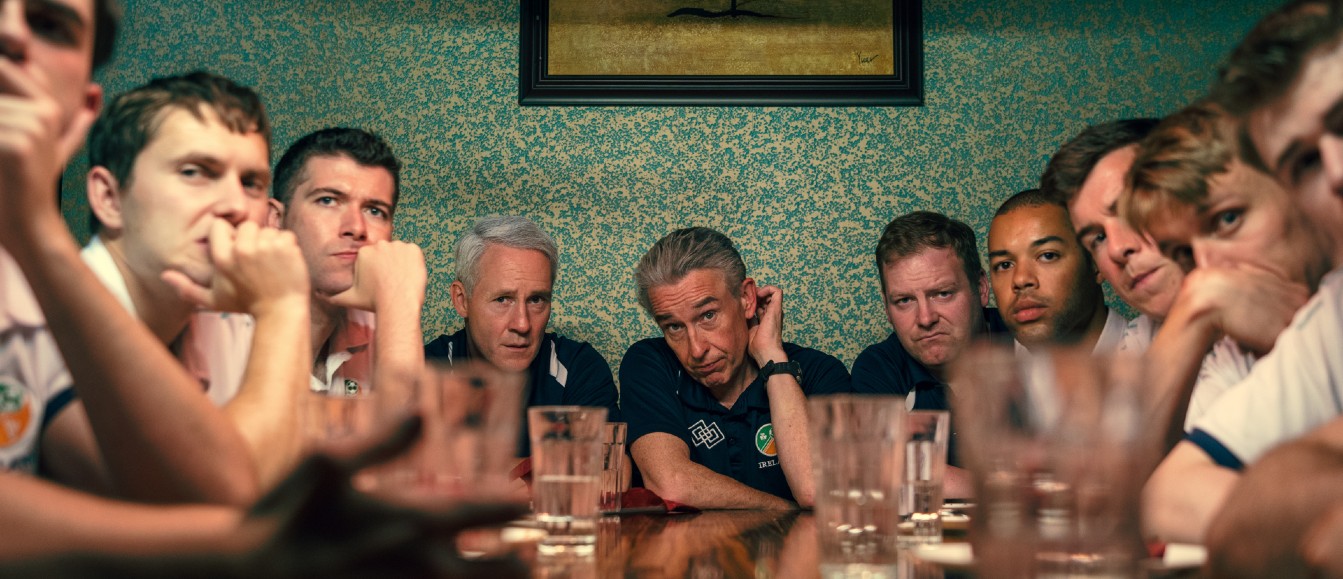
It’s 2002, the Ireland team have just qualified for the FIFA World Cup in Japan. The boys in green have flown out to the island of Saipan to prepare for the game of a lifetime. While there, team captain Roy Keane and manager Mick McCarthy would get into an almighty argument that would end with Keane removed from the team and the court of public opinion split wide open back at home. This is Saipan.
Not to bring my age into this, but I was a month old when Roy Keane boarded the plane home from Saipan. I have no recollection of this incredibly turbulent time in Irish sporting history, which is incredibly isolating when you are sat in a packed cinema while everyone around you discusses where they were when they heard the news. So, in order to get an understanding of how the Irish people felt about ‘The Saipan Incident’, I did what any good investigative journalist would do: I called my dad.
When I asked him who he sided with, without hesitation he said: “Oh, team Mick.” Ever the contrarian, my dad. When I questioned him further he called Roy Keane an expletive I cannot use in this review. But he did explain his argument further, stating that Keane’s behavior was unprofessional. Simple as. Which, fair enough, I suppose.
But this is what is so brilliant about Saipan. The ability of co-directors Lisa Barros D’sa and Glenn Leyburn to inject humanity into such a divisive and sensationalised story. The film works as historical fiction, bringing to life scenes only read in news articles and speculated about on the radio. It would be so easy to continue to play into the caricatures of McCarthy and Keane that have dominated Irish pop culture. Instead, we are treated to a gripping and very human re-telling of the famous argument that will have you leaving the theatre with a better understanding of all parties involved.
One of the unique ways that the directors chose to do this is by highlighting how toxic masculinity plays a key role in how this story unfolds. Below the surface of this re-telling of “The Saipan Incident”, is one of the most hard hitting depictions of Irish Masculinity that I have seen on screen. A unique type of machismo that underscores how all of these men interact; from the players to the FIA board members.
The toxicity of the patriarchy looms heavily over every scene in this film, especially those between Keane and McCarthy. This is best highlighted by the use of split screen editing that punctuates these key moments in the film. This way, we are able to witness the emotional performances of Éanna Hardwicke (Roy Keane) and Steve Coogan (Mick McCarthy) simultaneously. There is very little dialogue in these moments, and that feels intentional. Instead we get close ups of their contorted faces as they fight the urge to show emotion, to apologise.
In this way, the film suggests that the villain of this story is neither McCarthy or Keane, but the influence of the patriarchy. We watch how Keane and McCarthy fall victim to the poisoning of the male ego and how they let this dictate their decisions going forward. The viewer grows increasingly frustrated as the pair bottle up their feelings and refuse honest conversations time and time again throughout the film's run. Ultimately, sealing their fate in the conference room at the climax of the film.
Another moment from the film that struck me was the scenes of the boys partying on the first night of the trip. This montage sequence is shot with strobe lighting and with a heavy bassline pounding in tandem. It’s the usual lads holiday antics that we come to expect from such trips. Ungodly amounts of alcohol are consumed and havoc is wreaked on the grounds of the hotel, while ‘Kamikaze Keane’ chooses to refrain from such debauchery.
The positioning of Keane in this dynamic is interesting. Captain of the team and yet he is isolated for his rigid rule following. A social pariah during an already very turbulent time for his team. It’s these cracks in this supposed camaraderie that serve to increase the damage done during the climax of the film.
The team do not stand with Keane during his fight with McCarthy, insinuating he is being unreasonable for wanting what is best for his team. Under the patriarchy, male friendships are not prioritised and that works to the detriment of the Irish team. They stick together as a pack.
Roy Keane stands alone. And ultimately, Ireland lost the World Cup.
The Belfast Film Festival ended on a high note with their screening of Saipan. A film that, while focusing on one of the most talked about events in recent Irish history, forces the audience to reckon with their own identity.
With history repeating itself and Ireland qualifying for the World Cup next year, there is not a more appropriate time for Saipan to hit theatres. If you can, get to the cinema and watch this gem of modern Irish cinema for yourself.