LUMI Reviews: BFF: What can audiences learn from It Was Just An Accident?
01 December 2025
LUMI Programmer Ellie Traynor reviews Jafar Panahi’s latest film for Belfast Film Festival.
When your oppressor is handed to you on a silver platter and you are given the opportunity to end his reign of terror, what do you do? This is the question that drives the narrative of
modern morality play, It Was Just An Accident. This is a film that is incredibly necessary given our current political climate. With the far right and authoritarianism gaining more of a foothold in governments across the modern world, and with a rise of violence against the working people, it is important that we examine our own reaction to these regimes. Panahi uses his political thriller to measure these responses from audiences.
As a LUMI programmer here at the QFT, I was a part of programming the summer 2025 LUMI season, "Restriction and Resistance: Women in Iranian Cinema.” As a part of the programme, we screened Panahi’s 2006 football comedy, Offside. So obviously, when I heard that his newest film had not only won the Palme D’or at the Cannes Film Festival but would be screening in the QFT as a part of the Belfast Film Festival, I knew I had to see it as soon as humanly possible.
The film focuses on Vahid, an Azerbaijani mechanic, who is convinced that a man who has arrived at his garage is the Eghbal (or Pegleg); the man who tortured him in an Iranian prison. However, the man he kidnaps pleads his innocence and begs for his life. With the seeds of doubt now sown, Vahid must find other survivors of Eghbal’s torture to see if they can verify his hostage’s identity before he accidentally condemns an innocent man to death. During this unconventional roadtrip, the characters discuss what level of justice would truly satisfy them following their own horrific ordeals.
Director Jafar Panahi has been very outspoken against the Iranian government and therefore, he is no stranger to the Iranian prison system. Having been arrested for crimes of “Propaganda against the state”, he served three months in 2010 and seven months back in 2022 for protesting the arrests of his fellow directors. It was this most recent prison stay that inspired him to make this film.
When speaking with Frieze, Panahi had this to say about how his time in prison spurred on his art: “When you go to prison, you meet different people. You listen to their stories. It doesn’t matter where they come from. And now, when you want to make a film, you make a film about all of them.”
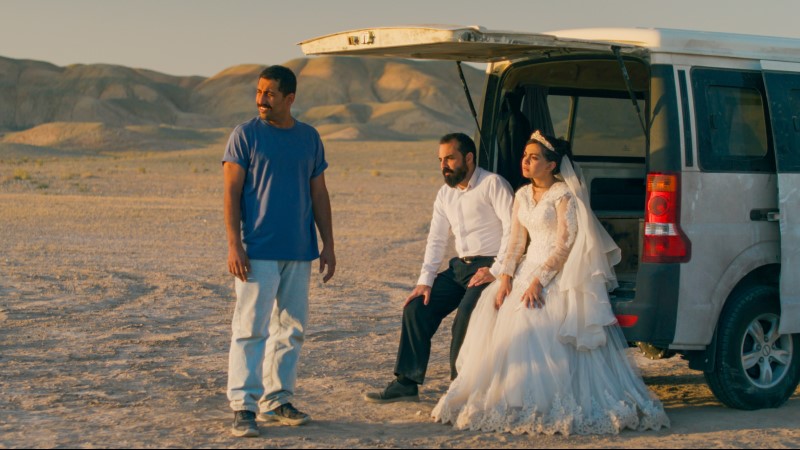
This appreciation for the people that he spent time with while in prison is shown through the complex cast of characters in this film. A young bride, a photographer, a mechanic, a hothead. Each one so vastly different from the next and yet they are all tied together through their shared trauma under the torment of the Eghbal.
The inside of this van acts as a microcosm of society at large. The conversations between these characters serve as an allegory for the bigger and more complex global political situation we see now. These discussions beg the audience to consider how we as a society deal with such tyrants? The twists and turns in the plot force the audience to confront their own reactions to what they’re seeing. How do they define right and wrong in such a scenario?
The humanity of the group is best displayed when the Eghbal gets a phone call from his young daughter. Her mother is pregnant and has fallen unconscious and she is scared and alone. The group have a brief argument over their next course of action but ultimately drive to help the young girl and her mother. At this point in the film, the group are convinced that the man held captive in that van is the man who tortured them without mercy. When given the opportunity to enact a tragedy onto his family as payback for their suffering, they don’t take it. Instead choosing compassion when it would not have been shown to them.
There is so much more I want to discuss in regards to this film and how it acts as a stark critique of these right-wing regimes, but I will hold back on my endless praise for now because I would hate to spoil this film for the uninitiated. But what I will say is that the final scene of this film had me feeling sick with dread.
If you’re still not over One Battle After Another, and you’re hungry for another political thriller then I implore you to watch It Was Just An Accident. While the film is directly speaking to the injustices occurring in Iran, the overall message should speak to audiences the world over. How do we act in the face of immorality? How can justice truly be served without stooping to their level? Without a doubt, I would call this one of the most important films of the year and should be a must watch for audiences everywhere.
It Was Just An Accident is showing at QFT from Friday 05 Dec 2025.