LUMI Reviews Cabaret- Anti-musical and the iconic Sally Bowles.
28 May 2026
LUMI Programmer Tiarnán McCloskey examines the extraordinary anti-musical, Cabaret, for LUMI's Pattern Recognition season.
As the age of new Hollywood ran rampant over American cinema, with fresh takes on all genres, such as The Graduate (1967)- which revolutionised the look of comedies with crash zooms, the hilarious scuba POV shot and drawn out static shots such as the iconic yet devastating ending- and the intense queer drama of Midnight Cowboy (1967), which marked a transition in the bold stories being told, breaking free of the censoring of the traditional Hollywood system. It was clear the audience were crying out for something. Could it be Dustin Hoffman? Absolutely, but not just him. They wanted films to stop telling them how they should feel, or how films should look. No more spoon feeding.
But as these genres were being revolutionised, there was a genre that felt it was being left behind. The studio musical. By the time this new age of cinema came rolling round, this was a genre that was slowly dying. Studios were desperate to recreate the success of films like Singin’ in the Rain (1952) and the more recent success at the time The Sound of Music (1965). The reason the genre was struggling was not only due to audience fatigue but also due to the sheer budget of these films, with huge dance numbers and massive production costs. These were films that couldn’t afford to bomb. Yet they did, like a first-time stand-up comedian. Films like Paint Your Wagon (1969), the bizarre goldmine themed western musical, cost a whopping $22 million dollars, but even Clint Eastwood couldn’t put the bums in seats to make that money back. You could say, audiences were Lee Marvin for more. Another film that suffered a similar fate as Paint Your Wagon was Sweet Charity (1969). The difference between Sweet Charity and Paint Your Wagon however, was that Sweet Charity was directed and choreographed by Mr. Bob Fosse, a man who realised that the genre he loved so dearly was going to meet a terrible fate if things didn’t change.
Fosse had started as a dancer but had made a successful transition into theatre direction and choreography, winning multiple Tony awards doing so. Having directed the stage version of Sweet Charity, Fosse’s friend and Hollywood icon, Shirley MacLaine, had used her sway to convince Universal Pictures that he was someone they needed to have. A gamble that would eventually pay off, but not at first. Sweet Charity was a taste of what was to come with future projects with his stamp of signature jazz dance choreography, however constant battles with the studio seeped into the final cut. Audiences felt that the film was too long, and to put it plainly, boring. The film made $10 million at the box office at a budget of $20 million. Having attempted to work within the studio system and failing, Fosse decided to take a massive risk. He wanted to make an anti-musical. As much as he appreciated the greats like Vincente Minnelli, Stanley Donen and Robert Wise, he had grown tired of the formula. Shoot wide, show feet, break into song and smile. We had all seen it before, as entertaining as they were. He wanted to change the way musicals were presented, and after discovering that a film adaptation of the John Kander and Fred Ebb musical, Cabaret, was in the works, Fosse knew that this was the vessel he would use to do it.
Due to Sweet Charity’s box office failure, the studio was hesitant to hire Fosse. But producer Cy Feuer argued that despite the failure, Fosse’s talent in staging musicals was unparalleled. After a lot of pleading, they conceded and Fosse was set to direct. The film would be a dark showing on the rise of Fascism in Berlin between 1929 to 1931, the vehicle to show this change would be the Kit-Kat club, a cabaret joint featuring dancers of all backgrounds and a mysterious master of ceremonies whose actions and performances through the film would speak on and mirror the actions of the Nazi Party. The real star of the cabaret however would be Sally Bowles, an American performer who has dreams of the big screen and of course money. However, she would consistently struggle with addictions to sex and booze, and have an inability to plant her feet in a situation without later changing her mind.
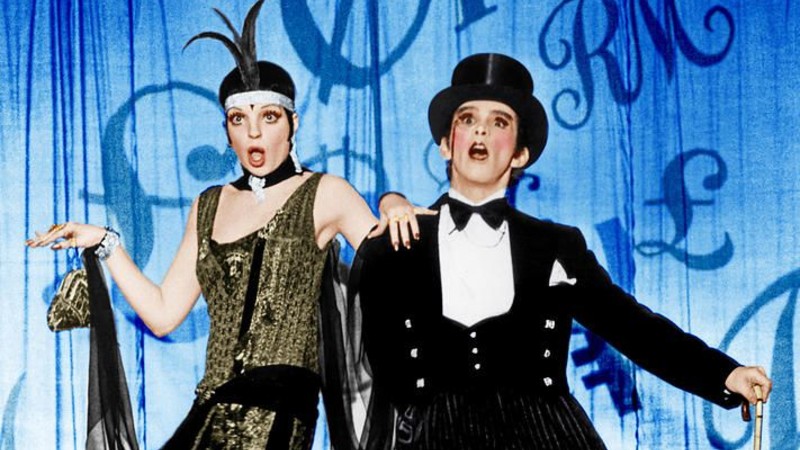
Throughout this New Hollywood era, it seemed the focus was on extremely masculine subjects. The inner psyche of Travis Bickle is one of many examples. There was an actress that thought this was a damn shame. The original nepo-baby, the iconic Liza Minnelli. Daughter of Judy Garland and Vincente’s Minnelli, the musical was in her blood. But she was desperate to break free from the large Dorothy shaped shadow of her mother. She saw the opportunity to do this whenever her close friends and collaborators Kander and Ebb informed her about the film adaptation of Cabaret. A Broadway show she was originally meant to be cast in, but director Hal Prince felt that Sally Bowles needed to have a mediocre vocal talent. Not a bad reason to miss out on casting. When conversations began between Fosse and Minnelli, they both agreed that Sally should be a far more complex version of the character the stage presented. One that had an air of incredible confidence; she was fast talking, funny, rude and most importantly had an undeniable stage presence, so easily brought to life by Minnelli, whose wide eyes make you ask a thousand questions. There was finally a role where a woman was allowed to grab the film and claim it for herself.
Costume was a huge component in this film. The crew travelled to Germany and began asking local vintage vendors if they had any clothing from the time of the war, to which they would reply, we have no such clothes, or would even retort, what war? It was clear they had a problem with the Americans coming to their home and retelling such a shameful part of their history. This led to Liza taking control of how she looked, with help of Halston, her go-to stylist. They managed to find contemporary pieces and reshaped them to fit the times. Liza even used one of Fosse’s wife’s vests during the terrifying “Mein Herr”. However, the most incredible story to come out of this was Liza secretly getting her hair cut, morphing into her iconic short pixie cut with angular bangs without telling anyone! Truly possessed by the spirit of Sally Bowles.
In terms of visual style, Fosse knew that he did not want anyone to just break out into song. All songs would take place on the main stage of the Kit-Kat club separate from the outside love affairs. This allowed him to whip the camera from limb to limb, cutting into each strain and thrust, focusing on the physicality of the dance, rather than worrying about capturing the entire movements. He basically looked at every musical prior and did the opposite. Much like his contemporaries in other genres, he took massive risks and in doing so pushed the genre in a positive direction. Following the low budget model of other new age Hollywood films, Cabaret was shot for a modest $4.6 million, and made a whopping $42.8 million.
Cabaret is looked back on as a film that reflects our own times, depicting how easy fascism rises whenever we laugh at it, and don’t take it seriously. It was also revolutionary in how it mirrored the sexual liberation of its own time, with a queer love triangle for the ages. 54 years on, Cabaret stands the test of time, and it does that by ripping up the status quo.
Tickets are on sale for our May 31st Screening at the QFT.