LUMI Reviews Nouvelle Vague: Is it time to say au revoir to the biopic?
28 January 2026
LUMI Programmer Faye B. reconsiders Linklater’s newest film and the legacy of Jean-Luc Godard’s À bout de souffle.
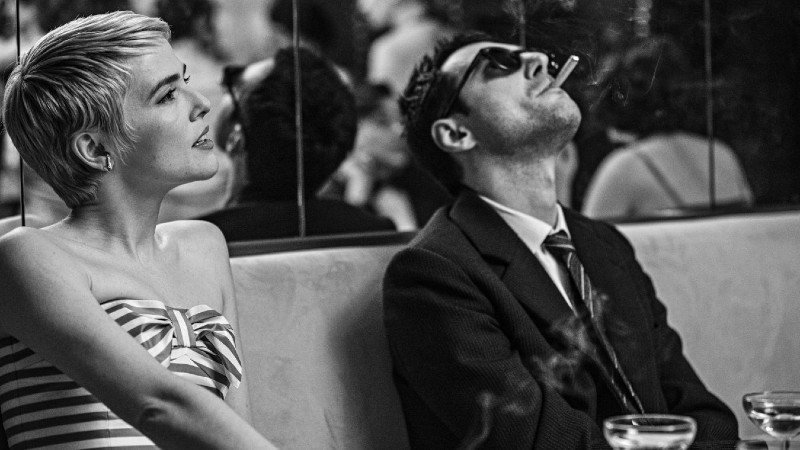
I debated whether or not my input on Nouvelle Vague was worthwhile, especially considering my colleague Dylan Kelly having already explored Linklater’s latest Linklation. Ultimately, I think my perspective differs from his enough to warrant a revisit.
First, I’ll put my cards on the table. I’m not much of a Godard fan. I loved Une femme est une femme, recently quite enjoyed Alphaville (tickets on sale now) and, perhaps heretically, was not thrilled by Breathless. Do not take this to mean that I think the film itself isn’t great; the rhythms of its editing and the steely detachment with which Godard presents to the audience its shadowy and dubious figures may not have resonated with my sensibilities, but its monumental legacy is not undeserved by any means.
That legacy is, however, disrespected by Linklater’s biopic, which puts forward such a noncommittal effort in different directions that the film ultimately feels aimless.
Regardless of the many criticisms I’m about to heap on this film, I would still recommend giving it a watch, if only on the merit of its actors. Stéphane Batut may very well be running a cloning lab with the scary resemblance some of these actors have, but that lab must have a fairly strong acting academy.
Guillaume Marbeck is an incredible discovery. While I don’t much care for Godard’s characterisation in this film, Marbeck brings a phenomenal playfulness to the role, and makes a concerted effort to bring the rather clunky dialogue to life. For his feature debut, he’s a very exciting talent.
Similarly, Deutch is great at capturing the energy that Seberg brought to the role of Patricia Franchini, and is fortunately spared the curse of faux-deep lines with which the director characters are all afflicted. The same goes for Dullin, who I will reiterate is 100% a clone of Belmondo whom I will be rescuing from the Jackal before the year is out.
I suppose I’ve alluded to the screenplay enough, so I suppose it’s time to address it head-on: you have seen this movie before. It’s an artist biopic, like the recent A Complete Unknown or any other, because the formula has gone wholly stale (if this picture was a bit gutsier, it would’ve gone the way of Better Man and had Godard played by a French bulldog; I will sell Nouvelle Dog to any studio that’ll take it.) I don’t understand what made Gent and Palmo think they could fix this reiteration of every plucky-underdog-genius-fighting-the-artistic-hegemony story ever told with people insufferably philosophising at each other back and forth, but it makes whole swathes of the film difficult to get through.
The structure is also all over the place. For 106 minutes, the filming of Breathless sags so much at times that I almost believed the film was closer to 150, but before you know it, the film’s ending has appeared out of nowhere - an unfortunate quirk of the vignette format applied where it doesn’t quite belong. Really, the biggest pace-breaker of the film is the incessant use of superfluous title cards every time a new cameo occurs - if I was the type to need a bit of text to tell me I’m looking at Agnès Varda, chances are that wouldn’t particularly enthuse me.
It has been said to death that Godard would’ve hated this film. It merits saying again. Nouvelle by name, vieille by nature, this film’s attempt at half-resurrecting Godard’s artistic vision lands as ‘cinephile catnip’ (to quote Chicago-based critic and filmmaker Jake Panek) at best, and hackneyed, hamfisted and half-baked at worst.
The visual language of this film is where many of my issues reside. The entire film is shot in black-and-white, Academy ratio. Why? Well, because so is Breathless. There’s a jump cut thrown in haphazardly during the first day of shooting, because there are jump cuts in Breathless. The shot from within Godard’s car on a country road, panning over to him? You get the idea by now. I don’t fault DP David Chambille; I’m sure he’s very talented when he’s not forced into aping Coutard, but Linklater’s vision seems to have turned a hair myopic, doomed to reiterate that which has gone before.
This is my ultimate problem with the film. Nouvelle Vague has little purpose, and even less confidence. Nouvelle Vague neither commits fully to using the stylistic sensibilities of Godard nor to going for its own visual language. It’s not sure whether to be detached or involved, it’s not certain if it’s for biopic fans looking for something a bit different or Godardites who want their own Avengers: Endgame. Alas, I’m not really either, so the film failed to strike a chord with me.
“The camera’s a ballpoint pen, an imbecile. It’s worth nothing if you have nothing to say.”