LUMI x Visions of Europe Alice Review
23 March 2026
Christopher Bryson, Film Hub NI Intern and student at Lagan College in Belfast, reviews March's LUMI Presents film for Visions of Europe.
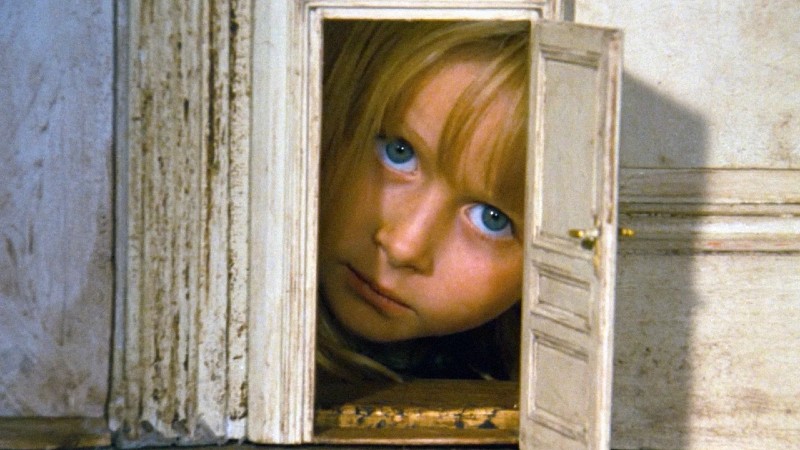
It is hard to know what to make of Czech director Jan Švankmajer’s surrealist adaptation of the iconic fantasy story Alice in Wonderland when the credits fall, although most audience members will probably come to find themselves either loving what they have just seen or despising it. For myself, I would have to say that I very much enjoyed this bizarre and unsettling journey, which perfectly strikes a very fine line between a sense of childlike wonder and an off-putting, unpredictable strangeness. This approach is clear from the first moments of the film, where Alice directly addresses the audience, stating ‘Now you will see a film, made for children… Perhaps’.
Indeed, the film captures that hazy and indescribable feeling of a dream that you may have had as a child, but it is unmistakably not made for general family viewing, given the psychological and uncanny unease which only becomes stronger as the film goes on, perhaps reaching its most disquieting point during the eerie and repetitive tea party scene.
The film appears to follow many of the familiar plot beats of the classic Lewis Carroll book, beginning with Alice following the White Rabbit as it escapes out of her room and leads her into an otherworldly and incomprehensible fantasy land. The White Rabbit, the first true sign of the film’s bizarre tone, is a creepy but entertaining character, characterized by his constant need to find a pair of scissors and his comical but freakish design, which borders on body horror at times - most apparent when the Rabbit takes out his signature clock from a tear inside of his stomach, in one of the film’s many moments of cursed visual ingenuity. The uncanniness nature of the White Rabbit is also further pushed through by the film’s brilliantly flawed stop motion animation, which gives a strange, slightly stilted movement to both the Rabbit and every other animated character in the film which fits the film’s dreamlike atmosphere.
The design of everything in the film is excellent across the board, with the sets mimicking domestic settings in warped ways and the puppets using high levels of detail to be as memorable and offbeat as possible, all of which makes the film feel like a fever dream than an actual narrative - in a good way.
The cinematography across the board is excellent, with the usage of a wide variety of camera angles helping to convey the disparate scale of the different characters against their surroundings in surreal and creative ways, while the usages of uncomfortable close-ups further nails the fantastically off-putting approach of the film. The editing and sound design are perfectly calculated to work smoothly together with the outlandish visual elements, further emphasising the nightmarish wonder as the film descends deeper and deeper into an odyssey of absurdity.
If there any flaws in the film, the deliberate lack of a concrete narrative means the film can be a struggle to pay attention to if you are not fully absorbed by the striking visuals and atmosphere, as the film started to lose me towards the end due to the it’s lack of any tangible structure - thankfully, the film is only 86 minutes, and is just about able to not overstay its welcome by the time you reach the psychologically frightening final moments. And really, for a film as surreal as this, a lack of a narrative structure is a flawed criticism, as the intent is less to create a progressing plot and much more so to create the impression of a vivid childlike nightmare, in which the film succeeds tremendously at.
Overall, Alice is an extremely striking and memorable surrealist fantasy with gorgeous visuals and a thick atmosphere of darkly disquieting fantasy, feeling like a highly artistic mix between the eccentric charm of The Dark Crystal, the nightmarish ambience of Eraserhead and the absurdism of the original Carroll book.